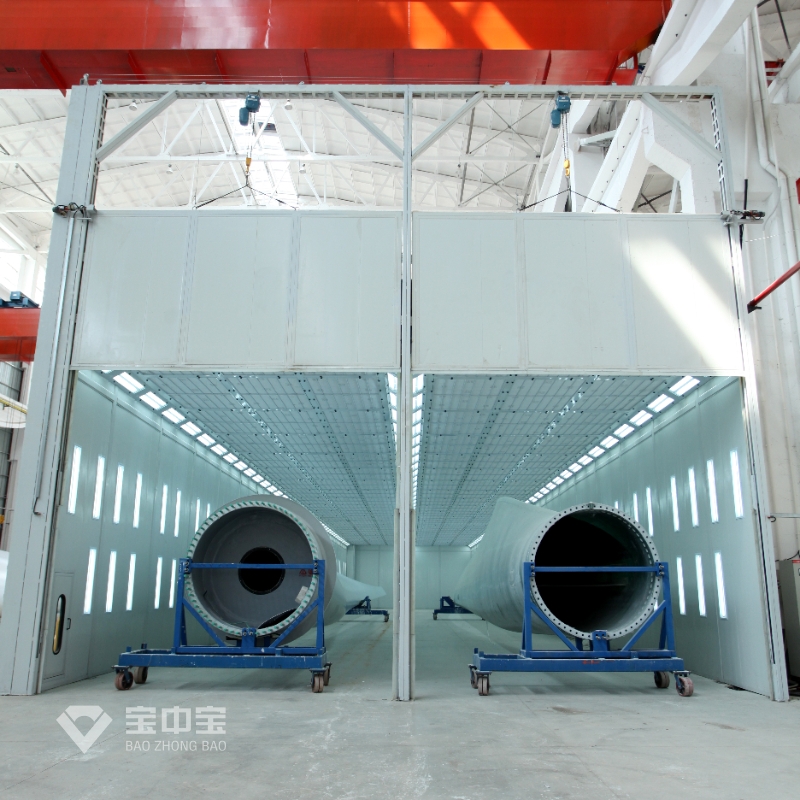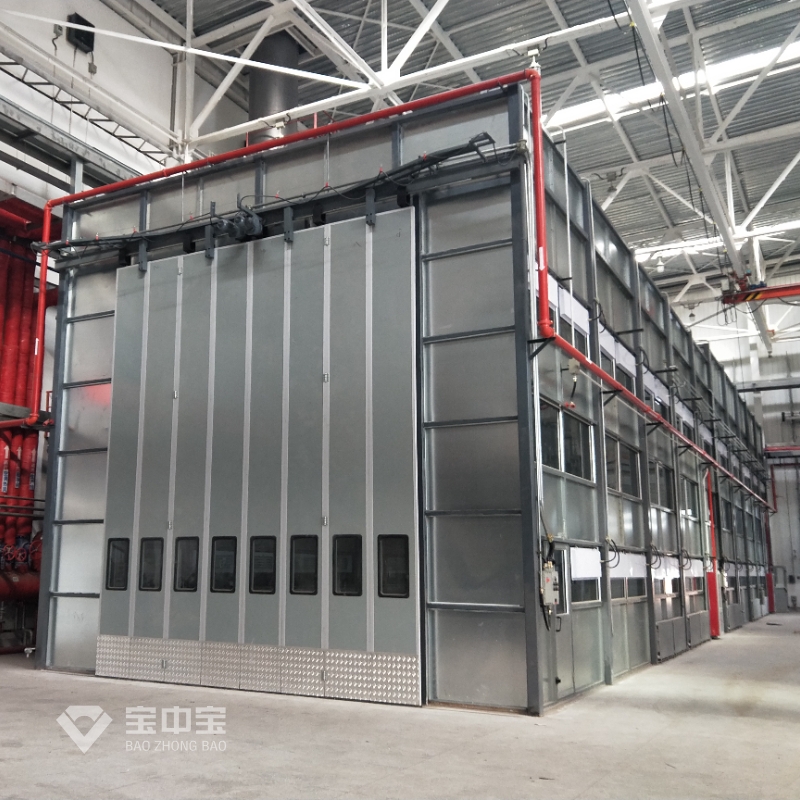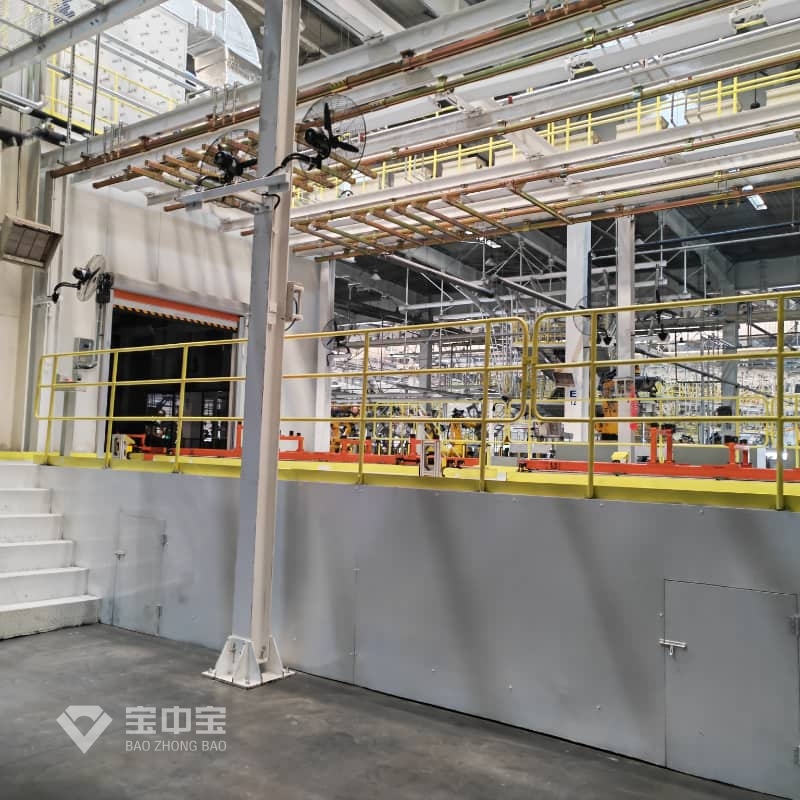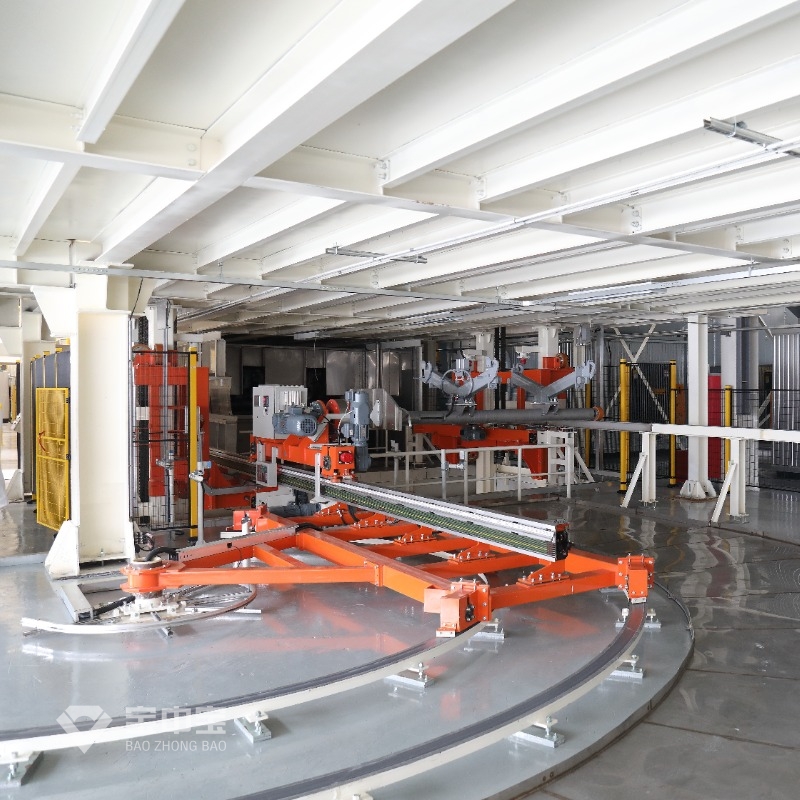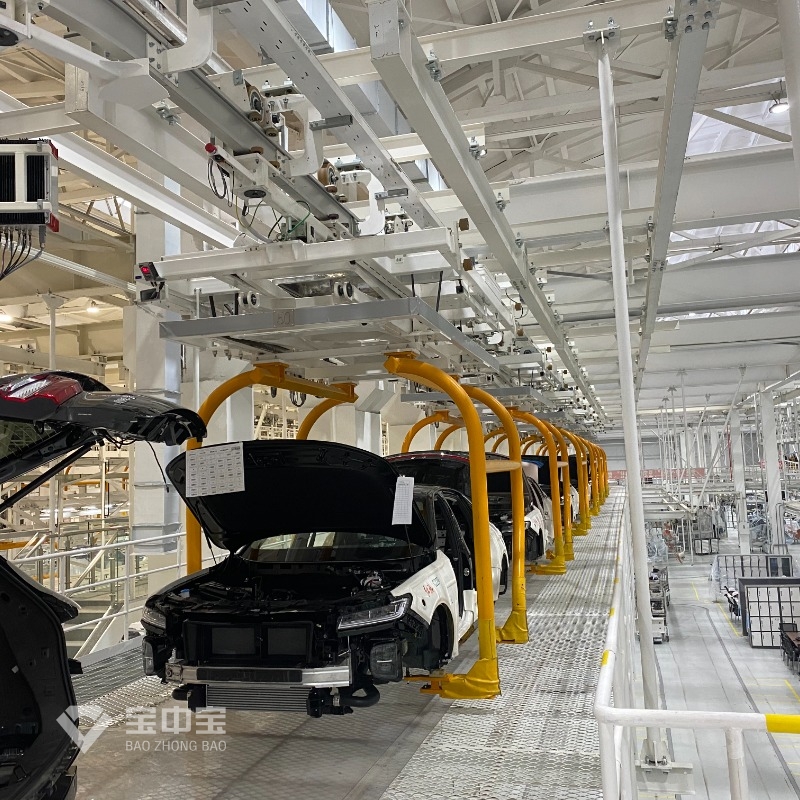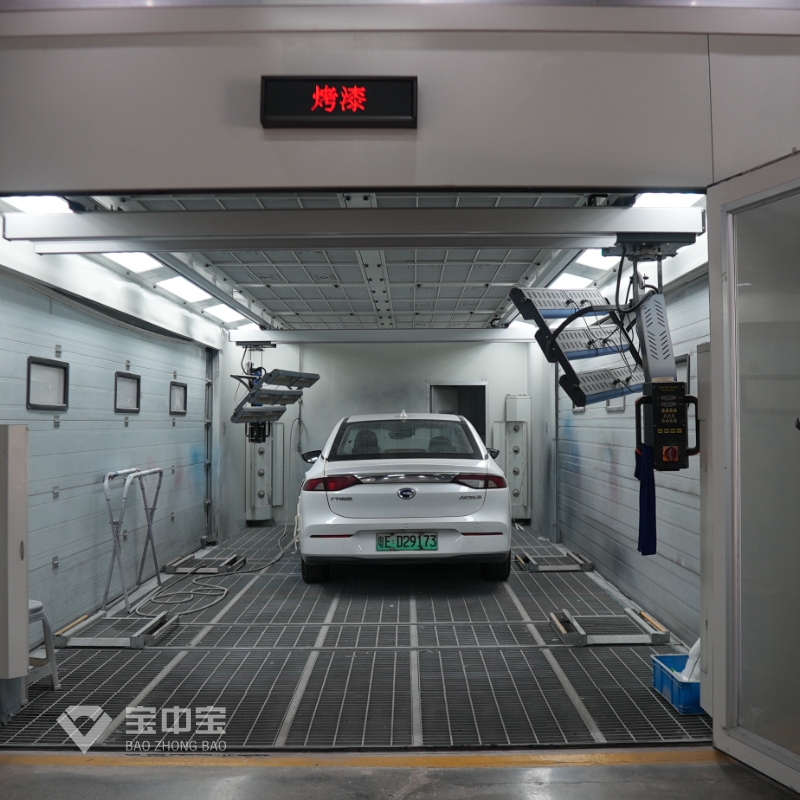

To select the right Standard Spray Booth size, measure the largest item you will coat, add working clearance, and confirm that the booth’s ventilation and utilities suit the process. Comparing standard spray booth dimensions, an automotive spray booth size, and spray booth airflow requirements means looking beyond the outside footprint: a crossdraft booth or downdraft booth needs correctly designed exhaust airflow, adequate face velocity, and balanced make-up air. The right size lets operators move safely around the workpiece while the ventilation system performs as designed.

There is no single booth size that is right for every shop. A booth must accommodate the workpiece, its supports or vehicle doors, the operator’s reach and movement, and the equipment used during coating. It also has to fit the building and support a ventilation system designed for the booth’s opening and coating process.
A frequent buying mistake is choosing a model based only on the part’s length and width. A car, cabinet, or machine may fit on paper but leave no space to open doors, reach rear panels, position a spray gun, or move a cart. At the other extreme, an unnecessarily large booth can require more building space and a ventilation design that is not suited to the shop’s needs.
Keep three kinds of dimensions separate:
- Workpiece dimensions: the maximum length, width, and height of the item, including fixtures, mirrors, open doors, or projecting components.
- Usable interior dimensions: the clear space available inside the booth. Ask whether the manufacturer’s listed dimensions are internal or external.
- Building and installation dimensions: the space needed for the booth shell, doors, exhaust components, service access, ductwork, and required clearances.
Do not treat a catalog label such as “standard” as a universal dimensional standard. Compare the manufacturer’s actual drawings and specifications.
What “the right Standard Spray Booth size” means
Collect information before requesting a quotation. This makes it easier to compare like-for-like proposals and identify missing details early.
Prepare to choose Standard Spray Booth dimensions
- A tape measure or laser distance meter for the workpiece and building.
- A sketch or floor plan showing columns, doors, ceiling height, drains, and other fixed obstructions.
- A list of the largest items to be coated, including the item’s supports and any parts that extend or open during work.
- Details of the coating process, such as the materials used, spraying method, expected production schedule, and whether the booth must also support curing.
- The proposed booth drawing, fan data, filter specifications, electrical requirements, and installation instructions from the supplier.
- Information on local building, fire, electrical, environmental, and occupational-safety requirements. The applicable rules depend on location and process.
Ask a qualified ventilation or fire-protection professional to review the design. Spray finishing can involve hazardous vapors, combustible materials, and ignition risks; a sizing calculation alone does not establish that a booth is safe or code-compliant.
Standard Spray Booth measuring tools and information
Step-by-step: Select a Standard Spray Booth size
Tools: tape measure or laser distance meter, notepad, and a helper for large items.
Action: Measure the workpiece at its maximum operating size—not just when it is closed or on the pallet. Include open vehicle doors, mirrors, handles, fixtures, turning stands, and any component that projects during coating.
Parameters: Record maximum length, width, and height. Measure in the orientation used during spraying. If several products are processed, use the largest practical work envelope, not an unusually small sample.
Check: Have a second person confirm the measurements and mark the workpiece outline on a floor plan.
If it fails: If the item’s orientation is uncertain, measure every likely orientation and ask the supplier which one the proposed booth accommodates. Do not assume the workpiece can be rotated inside the booth without clearance.
Step 1: Measure the largest workpiece for your Standard Spray Booth
Tools: floor plan, masking tape or chalk, and the actual cart, lift, or fixture where available.
Action: Draw the workpiece at scale and add the space needed for the operator to reach each surface, move safely, and handle hoses or coating equipment. Account for door swing, loading equipment, and safe routes in and out.
Parameters: There is no universal clearance figure suitable for every booth and job. Determine the required space from the work method, equipment dimensions, operator access, and applicable safety requirements. Have the booth supplier confirm the clear internal dimensions in writing.
Check: Walk through the marked layout. Confirm that doors can open and that the operator can reach the work without being trapped between the part and booth wall.
If it fails: Change the workpiece orientation, select a larger booth, or revise the loading method. Do not solve a clearance problem by blocking an air inlet, filter, or escape route.
Step 2: Add operator and equipment clearance to the Standard Spray Booth layout
Tools: building plan, tape measure, and supplier installation drawing.
Action: Measure the proposed installation area, including floor-to-ceiling height and the route for moving booth components into the building. Mark columns, beams, lights, sprinklers, doors, and existing mechanical equipment.
Parameters: Compare the building measurements with the booth’s external dimensions and the manufacturer’s stated installation and service clearances. Include space for ductwork, exhaust fans, access panels, and any required make-up-air equipment.
Check: Ask the supplier or installer to review a dimensioned floor plan and confirm the proposed arrangement before ordering.
If it fails: Do not rely on a rough catalog footprint. Request a revised layout or have a qualified designer assess whether a different configuration is feasible.
Step 3: Confirm building fit for the Standard Spray Booth
Tools: manufacturer’s ventilation schedule, booth opening dimensions, fan curve, and a qualified ventilation professional.
Action: Identify whether the design is crossdraft, downdraft, or another configuration. Ask the supplier to document the intended airflow path, exhaust volume, filter arrangement, and make-up-air provisions. Do not select the fan from booth size alone.
Parameters: As one U.S. regulatory reference, OSHA 29 CFR 1910.107(b)(5)(i) specifies an average air velocity of at least 100 linear feet per minute across the open face of certain spray booths with an open front or open side. Applicability depends on the booth and operation, and other provisions or local rules may apply. This open-face benchmark is not a universal design value for every booth type. A preliminary open-face estimate uses opening area multiplied by the applicable target velocity; a professional must verify the complete design, including filters, duct losses, and operating conditions.
Illustrative calculation, not a customer case: If an open booth face is 14 feet wide and 8 feet high, its area is 112 square feet. Multiplying by 100 feet per minute gives a preliminary estimate of 11,200 cubic feet per minute. This arithmetic illustrates the method only; it does not establish that this airflow is appropriate for a particular booth or satisfy all code, capture, or safety requirements.
Check: Request documented design airflow and commissioning measurements from the responsible supplier or engineer. Confirm how airflow is measured and under what filter condition.
If it fails: If the airflow schedule is absent, inconsistent with the booth opening, or unsupported by fan data, pause the purchase and request an engineered clarification. Do not compensate by fitting a larger fan without checking system pressure, electrical capacity, and the complete ventilation design.
Step 4: Match Standard Spray Booth airflow to the design
Tools: equipment schedule, site utility information, and review by qualified electrical, ventilation, and fire-protection professionals.
Action: Compare the booth specification with the site’s electrical supply, heating needs if applicable, compressed-air requirements, exhaust route, filter access, and planned fire-protection provisions. Confirm which components are included and which are supplied by others.
Parameters: Use the manufacturer’s stated voltage, phase, power, connection, and service requirements rather than estimating them. Confirm filter type and replacement access, and check how the design addresses the coating materials and operating conditions.
Check: Obtain written confirmation that the proposed equipment and building services are compatible and that the installation will be reviewed against applicable local requirements.
If it fails: Resolve utility or safety gaps before purchase and installation. Never bypass interlocks, remove filters, or operate equipment outside the approved design to make an undersized or poorly ventilated booth usable.
Step 5: Verify utilities, filters, and safety provisions for the Standard Spray Booth
Tools: approved drawings, commissioning records, and instruments used by qualified technicians.
Action: Before routine spraying, have the installed system inspected and tested in line with its design and applicable requirements. Confirm the airflow direction, exhaust operation, controls, and safety systems with the responsible professionals.
Parameters: Use the specified acceptance criteria for the particular booth and jurisdiction. Do not substitute a generic air-change figure for the required performance test.
Check: Keep the final drawings, inspection records, airflow results, operating instructions, and maintenance schedule accessible to the people who run the booth.
If it fails: Do not begin production until the responsible installer or engineer identifies and corrects the issue and documents the result.
Step 6: Review and commission the Standard Spray Booth before production
Worked Standard Spray Booth sizing example
The following is a transparent planning example, not a verified customer story or a report of measured results. Suppose a shop wants to coat a vehicle and measures its maximum operating envelope at 16 feet long, 7 feet wide, and 6 feet high. Those figures are assumptions for the example, not universal vehicle dimensions or a recommendation for a standard booth.
- Record the vehicle measurements with doors and accessories in the positions used during spraying.
- Mark the vehicle and the operator’s actual working route on a floor plan. Add the space required for the spray equipment, safe access, and loading method rather than using an unexplained fixed clearance.
- Compare that working envelope with the manufacturer’s stated clear internal booth dimensions, then compare the booth’s external dimensions with the building and service space.
- Ask for the proposed ventilation design and have a qualified professional determine whether the booth configuration and airflow meet the applicable requirements for the process.
- Check utilities, exhaust routing, filters, installation access, and safety provisions before approving the order.
This process turns a nominal vehicle size into a verifiable purchase specification without pretending that a single catalog size suits every vehicle or shop.
Common Standard Spray Booth sizing errors and fixes
Choosing by exterior dimensions alone
Problem: The advertised booth footprint fits the building, but the internal working space does not fit the job. Fix: Request a drawing that labels clear interior dimensions, exterior dimensions, door openings, and service clearances.
Ignoring the operator’s working envelope
Problem: The part fits, but the operator cannot reach surfaces or move equipment safely. Fix: Plan the work process on a scaled layout and test access with the real fixture or equipment wherever possible.
Using a generic airflow figure for every booth type
Problem: An open-face calculation is applied to a downdraft design, or a fan is chosen without considering filters and duct resistance. Fix: Have a qualified designer specify the system for the actual booth configuration and verify it after installation.
Forgetting exhaust and make-up-air space
Problem: The booth fits, but there is no practical route for ductwork or sufficient room for associated equipment. Fix: Include the whole ventilation system and service access in the building layout review.
Assuming “standard” means code-approved
Problem: A standard model is treated as automatically compliant at every site. Fix: Check the design, installation, and operation against the rules adopted in your jurisdiction and the specifics of your coating process.
Accepting a promised performance figure without test conditions
Problem: A quoted airflow number is not tied to a measurement method or filter condition. Fix: Ask how performance will be measured, what acceptance criteria apply, and what commissioning records will be provided.
Questions to ask a Standard Spray Booth supplier
- Are the quoted dimensions internal or external, and what is the usable opening?
- What workpiece envelope and operating orientation does the proposed model accommodate?
- What booth airflow configuration is proposed, and what design data supports it?
- What are the electrical and other utility requirements?
- Which filters, fans, controls, and safety components are included?
- What building clearances, duct routes, and service access are required?
- Who is responsible for local code review, installation, inspection, and commissioning?
- What documents and measured test results will be supplied at handover?
Jingzhongjing Group can be included in your supplier comparison, but evaluate any supplier on the specific drawings, equipment schedule, documented design data, installation scope, and support offered for your project. Do not infer a performance or compliance guarantee from a brand name alone.
Summary: Choose a Standard Spray Booth by fit and verified performance
The right Standard Spray Booth is large enough for the real work envelope, workable for the operator, compatible with the building, and supported by a ventilation design reviewed for the process and local requirements. Measure first, compare internal and external dimensions, document utilities and clearances, and require appropriate commissioning evidence. Treat the open-face airflow example as a calculation aid—not a complete design. Checking standard spray booth dimensions, spray booth airflow requirements, and safety provisions together is the most reliable way to avoid ordering a booth that fits on paper but fails in use.