News
Nov. 03, 2026
To reduce paint waste in an Automotive Painting System, measure where material is lost before changing gun settings or buying equipment. Track mixed paint, usable leftovers, rework, and overspray; then check transfer efficiency, atomization, film build, and booth conditions against the coating technical data sheet (TDS) and equipment manual. This guide covers paint waste reduction in automotive painting, automotive paint transfer efficiency, and practical controls for a paint booth—without relying on unverified savings claims.

Paint waste is not limited to visible overspray. It can include overmixing, expired or contaminated material, paint trapped in cups and lines, excessive film build, color-match retries, and parts rejected for defects. Each loss has a different cause, so a single adjustment—such as lowering fluid flow—may reduce consumption while creating thin coverage, poor appearance, or rework.
Start by distinguishing material purchased from material that reaches an acceptable finished part. Transfer efficiency describes the proportion of sprayed coating solids deposited on the target; it is not the same as paint usage per vehicle or per part. A useful plant metric is coating used per accepted unit, with rework and scrap recorded separately. Choose a consistent measurement basis, such as mass or volume, and keep it consistent across shifts and coating systems.
For regulatory context, consult the applicable requirements for your location. In the United States, OSHA's spray-finishing requirements are in , and certain area-source coating operations may be subject to . Applicability depends on the operation and jurisdiction; verify it with a qualified compliance professional.
Tools: Mixing and issue records, a suitable scale or volume-measuring method, production counts, and a spreadsheet or production system.
Action: For each coating and job family, record material issued, material returned in usable condition, material discarded, accepted units, and rework. Record color changes and unusual jobs separately. Agree on whether quantities are measured as mixed material, unmixed components, or coating solids; do not combine these bases.
Parameters: Use one consistent time period and unit of measure. Include the same production boundary each time—for example, the same point from paint issue through accepted finish. Do not treat leftover material as reusable unless it remains within the supplier's stated pot life and is uncontaminated.
Check: Reconcile issued material with returned, consumed, and discarded material. Investigate missing entries before interpreting a change as a reduction.
If it fails: If records cannot be reconciled, add a sign-off at mixing and disposal, identify containers by job or batch, and retrain staff on what counts as a return, a discard, and rework. Avoid setting a savings target from incomplete data.
Tools: Current TDS, approved mixing cups or scales, clean labeled containers, and the production schedule.
Action: Mix only the quantity reasonably needed for the scheduled work, while allowing for the coating supplier's minimum batch requirements and the job's color-match process. Use the specified ratio and mixing sequence. Keep components closed and identify each mix with the product, time, and job or batch.
Parameters: Follow the exact ratio, induction time, temperature conditions, and pot life stated in the current product documentation. There is no universal mixing ratio or pot life for automotive coatings.
Check: Compare the mixed quantity with the amount applied and the amount discarded. Review whether leftover material is associated with a particular job size, color, shift, or planning pattern.
If it fails: If material repeatedly expires, adjust batch planning or the sequence of compatible jobs with the coating supplier's approval. Never extend pot life by adding reducer or combining old and new material unless the supplier explicitly permits it.
Tools: Gun and fluid-tip documentation, regulator, pressure gauge, approved test panel, and the coating TDS.
Action: Confirm that the gun, tip, air cap, and fluid delivery method are suitable for the material and application. Check for clean passages, damaged seals, and leaks. Set pressure and fluid delivery using the manufacturer's procedure, then test the pattern on a panel before spraying a production part.
Parameters: Use the gun maker's stated measurement point for pressure and the coating supplier's application instructions. Keep distance, angle, overlap, and pass speed consistent with the approved process. Do not copy a pressure value from another gun or infer it from the regulator reading if the manual specifies a different measurement point.
Check: Inspect the test pattern for even distribution, suitable atomization, and defects such as heavy edges, tails, or dry spray. Confirm the finish and coverage against the plant's approved standard.
If it fails: Clean the air cap and fluid passages using approved methods; check the air supply, hose, filters, and tip condition. Change one setting at a time and make another test panel. If the pattern remains unstable, stop and involve maintenance or the equipment supplier rather than compensating with extra coats.
Tools: Work instructions, representative parts or practice panels, suitable lighting, and a way to record process checks.
Action: Train operators to hold a consistent gun orientation and working distance, move at a controlled speed, and apply the approved overlap and sequence. Present parts so the spray can reach the target without unnecessary passes. Use a consistent start and stop method to avoid concentrated deposits at edges.
Parameters: Use the process values approved for the specific coating, gun, and part geometry. Define acceptable coverage and finish with the production quality standard; do not replace that standard with a generic distance or overlap percentage.
Check: Compare panels or parts sprayed by different operators under the same material and equipment conditions. Look for uneven film build, dry areas, runs, mottling, and overspray on fixtures or booth surfaces.
If it fails: Coach against the observed defect, then repeat a controlled test. If all operators see the same problem, investigate equipment, material condition, or booth airflow before attributing it to technique.
Tools: Booth maintenance records and the instruments specified by the booth manufacturer or site procedure.
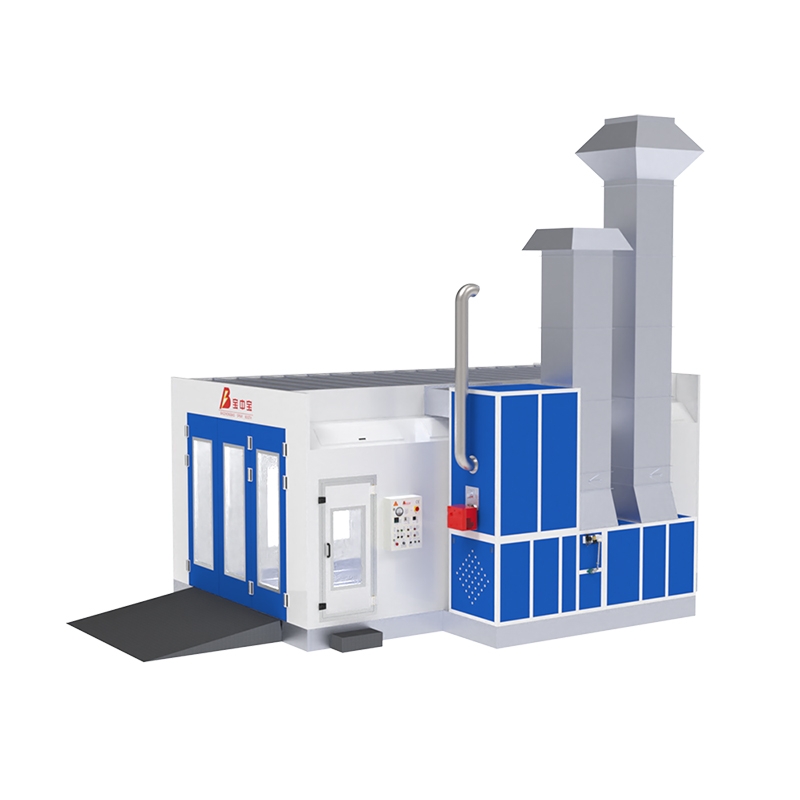
Action: Inspect filters, intakes, exhaust paths, lighting, and housekeeping. Check that doors and other openings are used as intended, and that the booth is operating in its approved configuration. Arrange airflow checks through qualified personnel when readings or finish defects suggest a problem.
Parameters: Use the booth maker's operating limits and the site's validated process settings. Airflow requirements vary by booth design and governing rules, so do not apply a universal airflow number.
Check: Review maintenance and pressure readings where the system provides them. Look for overspray accumulation, unusual dust, inconsistent finish, or filter loading that coincides with a process change.
If it fails: Follow the approved filter-change and maintenance procedure. Do not spray with compromised ventilation or bypass a safety interlock to keep production running. Escalate persistent airflow or contamination issues to facilities and safety staff.
Tools: A suitable film-thickness instrument when applicable, wet-film tools if specified by the process, and the coating system's quality criteria.
Action: Check film build at the locations and stages defined by the inspection plan. Link measurements and defects to the job, coating batch, gun setup, operator, and booth condition. Investigate color or finish failures before applying another full coat.
Parameters: Use the coating maker's specified film-build range and the plant's approved measurement method. Measurement suitability depends on substrate, coating stage, and instrument; confirm the method is valid before relying on its readings.
Check: Compare measurements and visual quality with the approved acceptance criteria. Review whether excessive build, thin coverage, or repeated correction is driving material use.
If it fails: Quarantine parts that do not meet the quality standard and follow the documented repair process. Identify the cause before respraying; repeated correction without diagnosis can increase waste and obscure the original defect.
Tools: Baseline records, production and quality data, maintenance logs, and a change-control record.
Action: Compare material use per accepted unit across comparable work. Review discarded mix, rework, scrap, and overspray observations separately. Test proposed changes on a limited, controlled basis and document the product, equipment, settings, operator, and inspection result.
Parameters: Compare like with like: same coating system, similar job mix, consistent measurement basis, and equivalent quality criteria. A change is not a genuine improvement if it reduces paint use but increases defects or rework.
Check: Confirm that the material records reconcile and that quality remains within the approved standard. Continue monitoring after any process change rather than relying on a single favorable run.
If it fails: Return to the last approved process when quality or safety is affected. Review the trial with production, quality, maintenance, and the coating supplier before making another change.
A named operator story or plant result should only be published when it can be checked against a source, such as a documented interview, an approved customer case study, or auditable production records. No independently verifiable personal case or plant dataset was provided for this article, so it would be misleading to claim that a particular shop reduced paint use by a stated percentage or amount.
For a verifiable case study at your facility, record the baseline and trial conditions, material quantities, accepted production, rework, and quality results. Preserve the original records and obtain permission before identifying a worker or company. Public regulatory references such as OSHA's spray-finishing standard and EPA's Subpart HHHHHH explain compliance obligations; they are not proof of an individual shop's paint savings.
Begin with a reconciled material baseline, then work through batch planning, gun setup, operator technique, booth condition, and film-build control. Follow the coating TDS and equipment manuals, protect workers, and validate every change against finished-part quality. Jingzhongjing Group may be one of the organizations a facility consults when reviewing painting-system requirements; independently verify any proposed equipment specification, compliance claim, and expected result for the actual line. Consistent measurement and controlled trials are the reliable route to reducing paint waste in an automotive painting system.